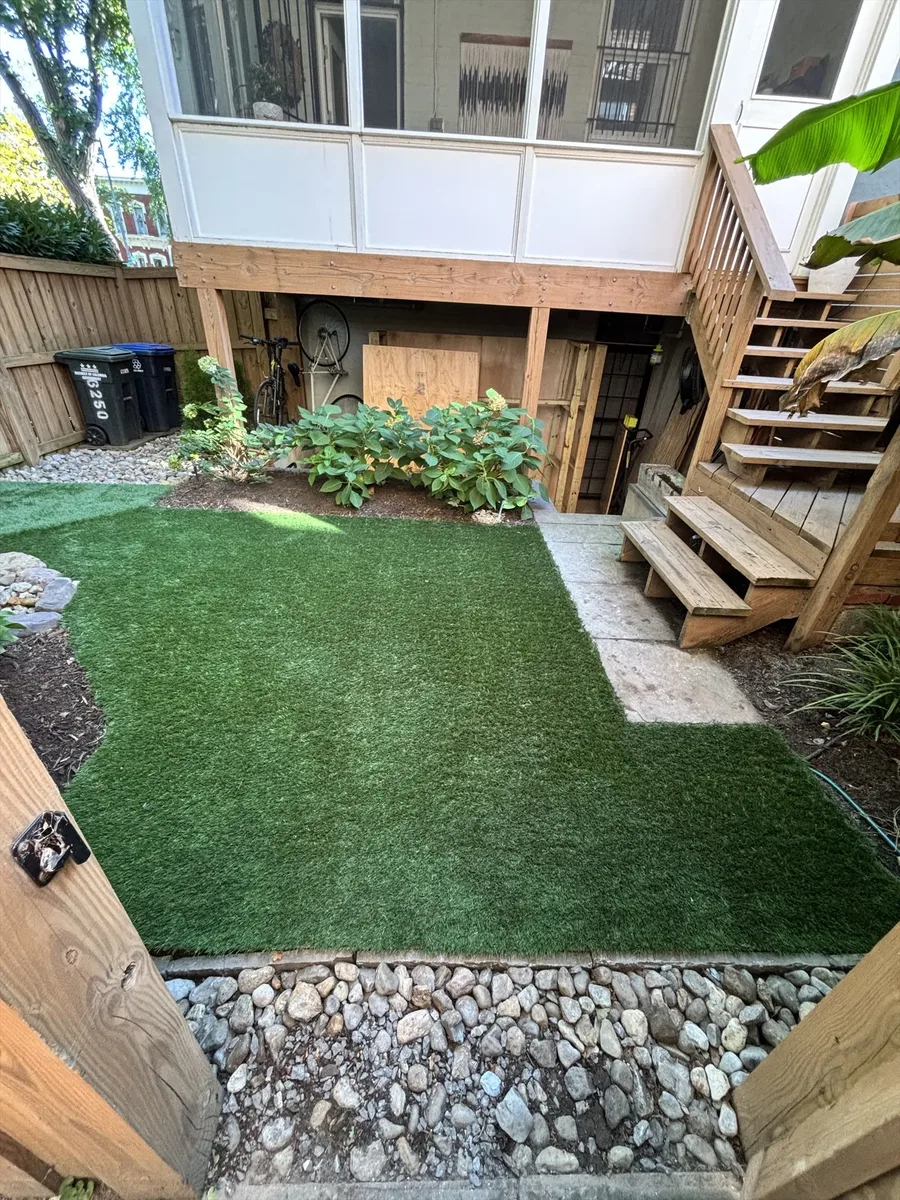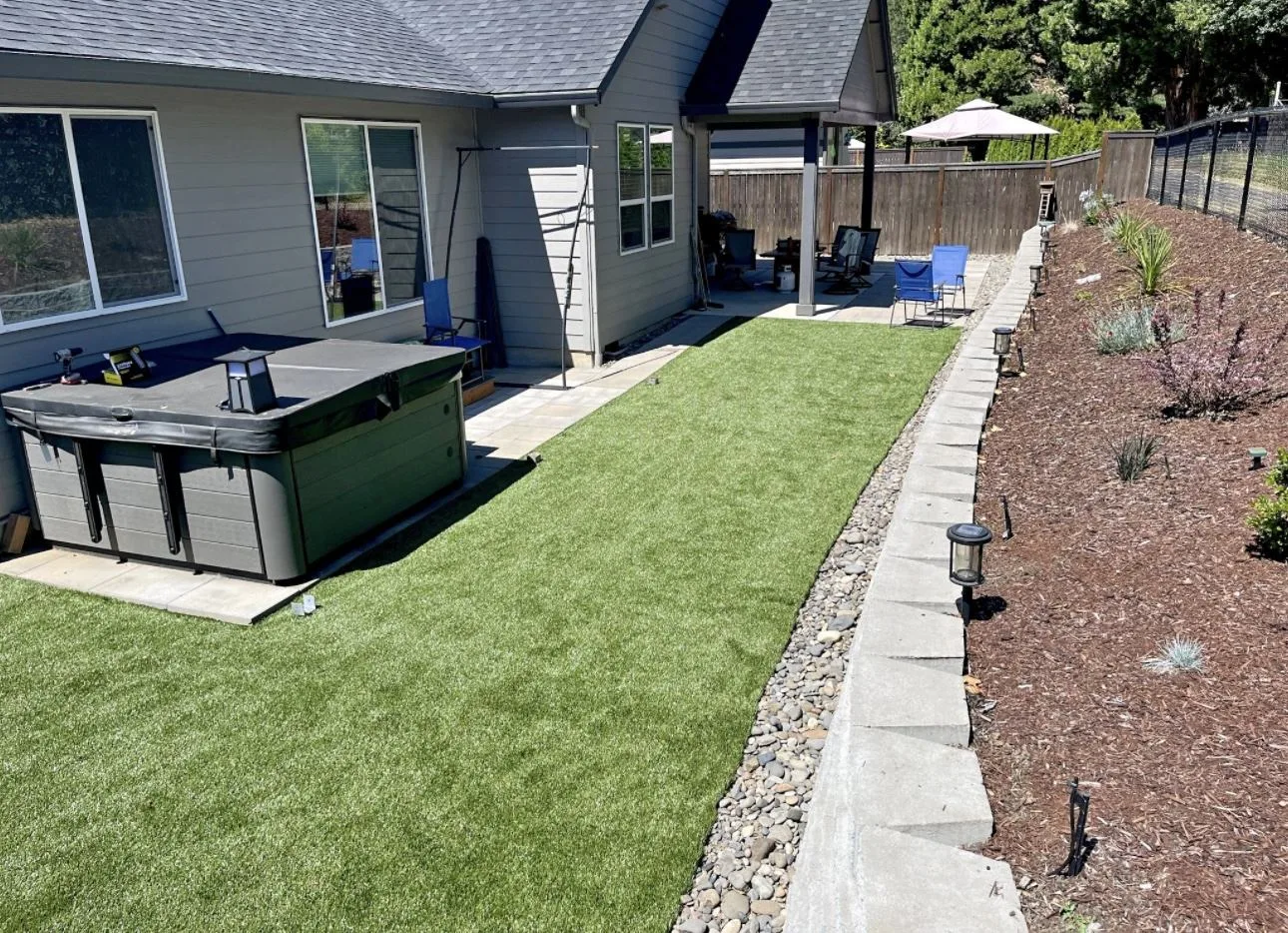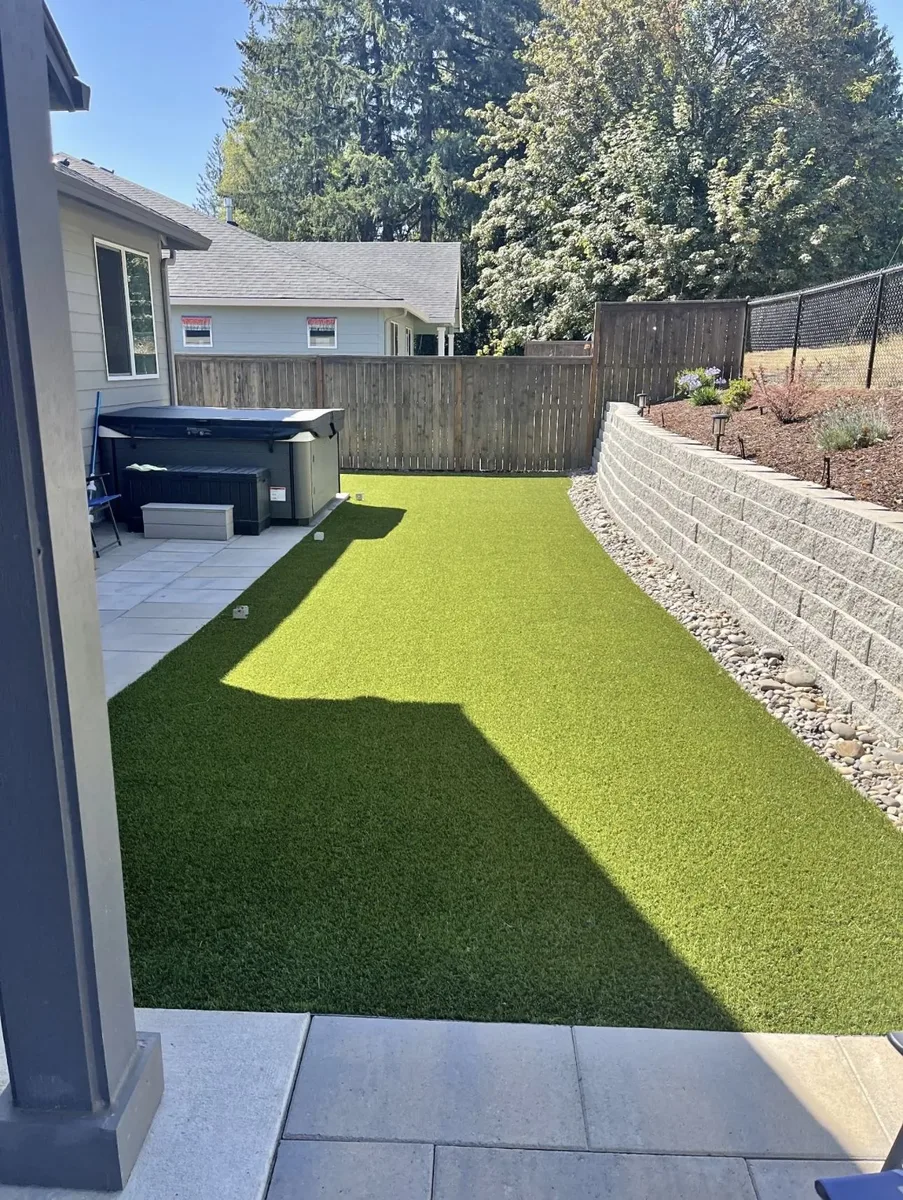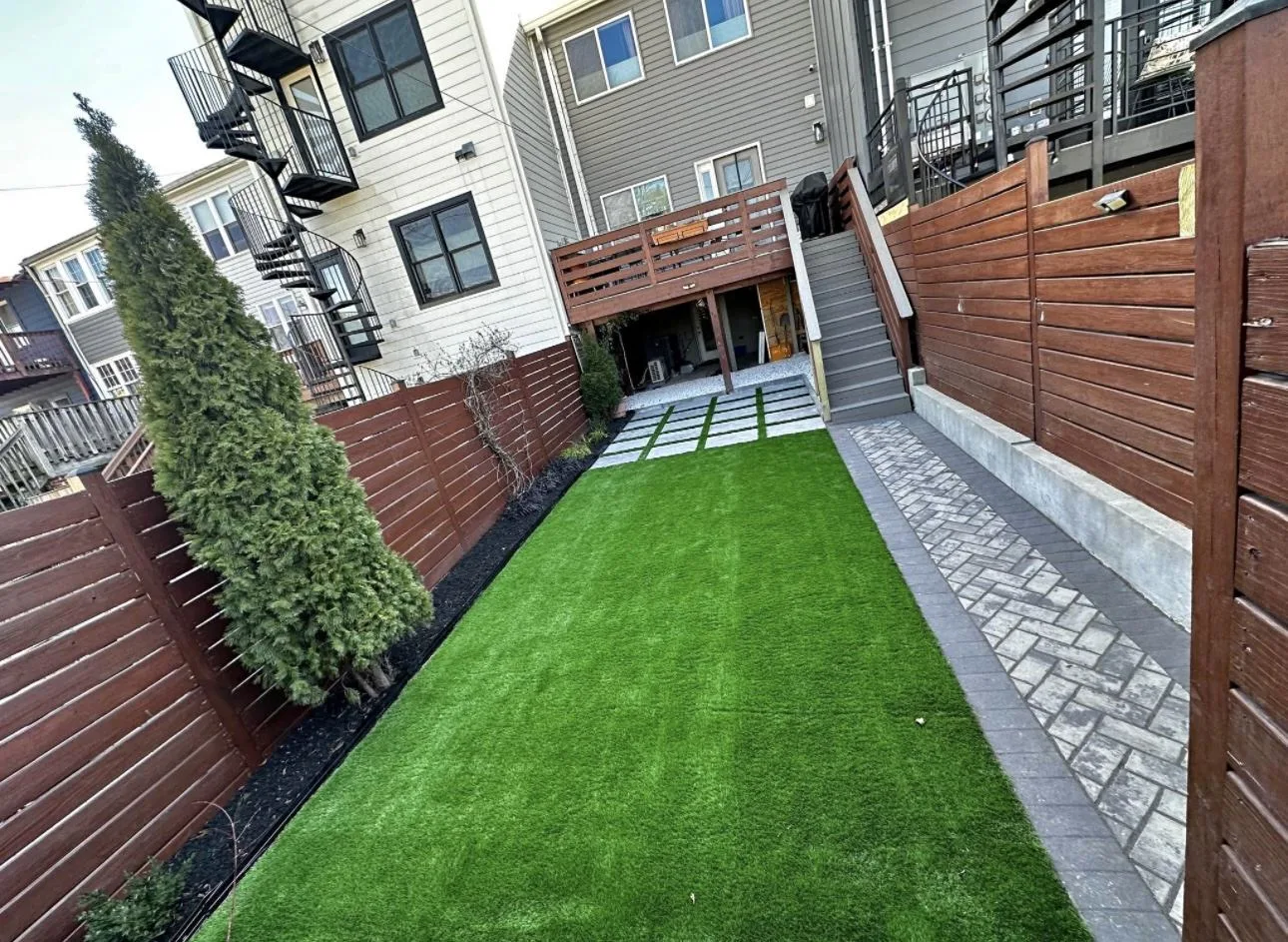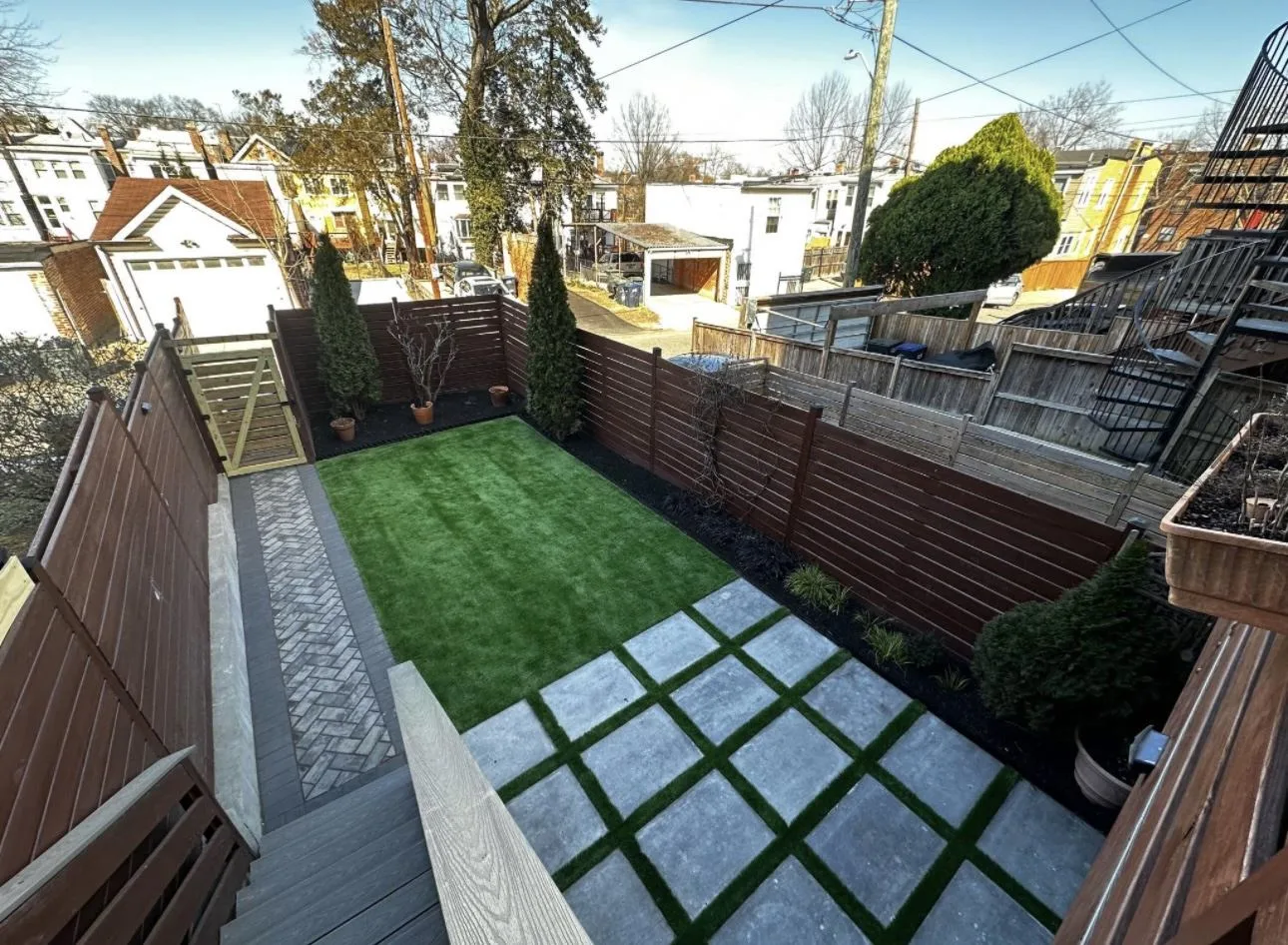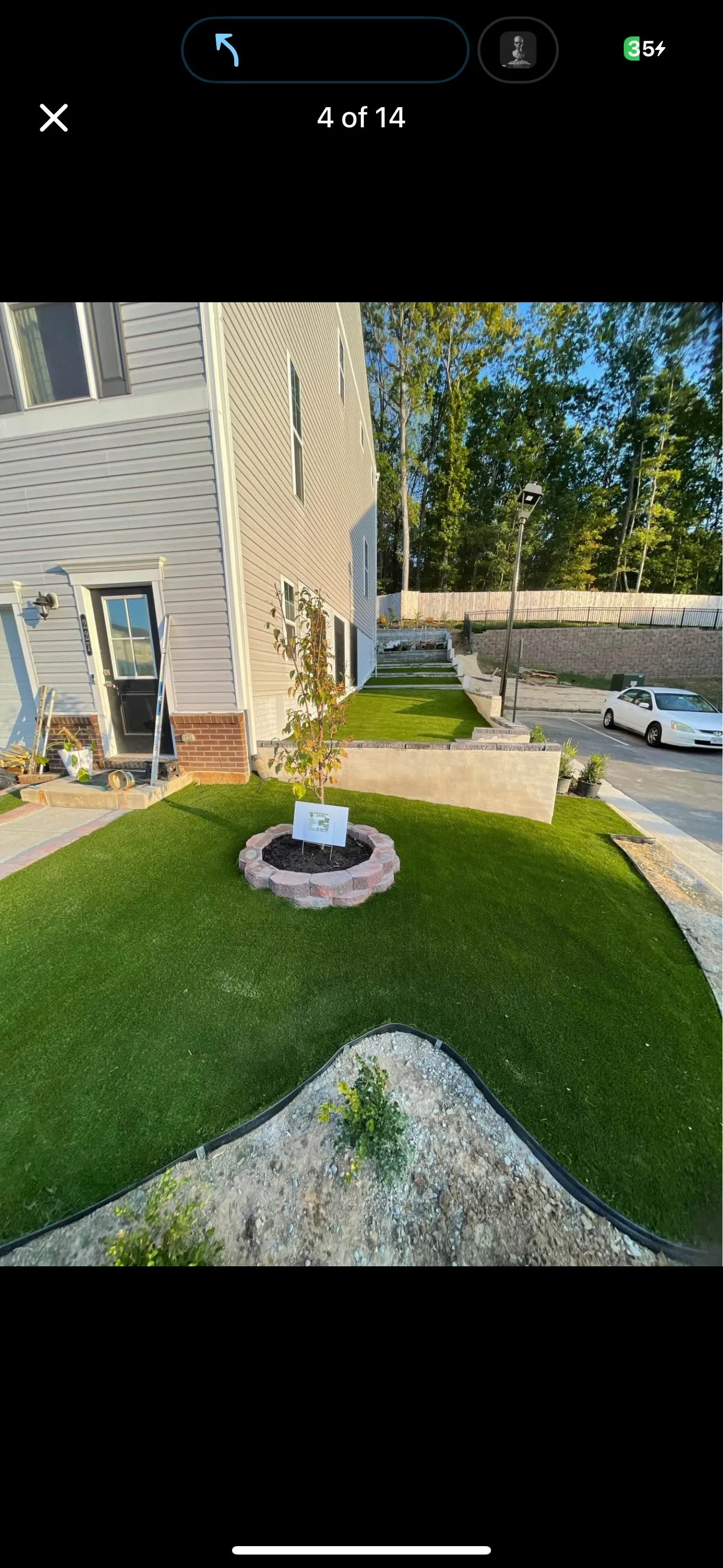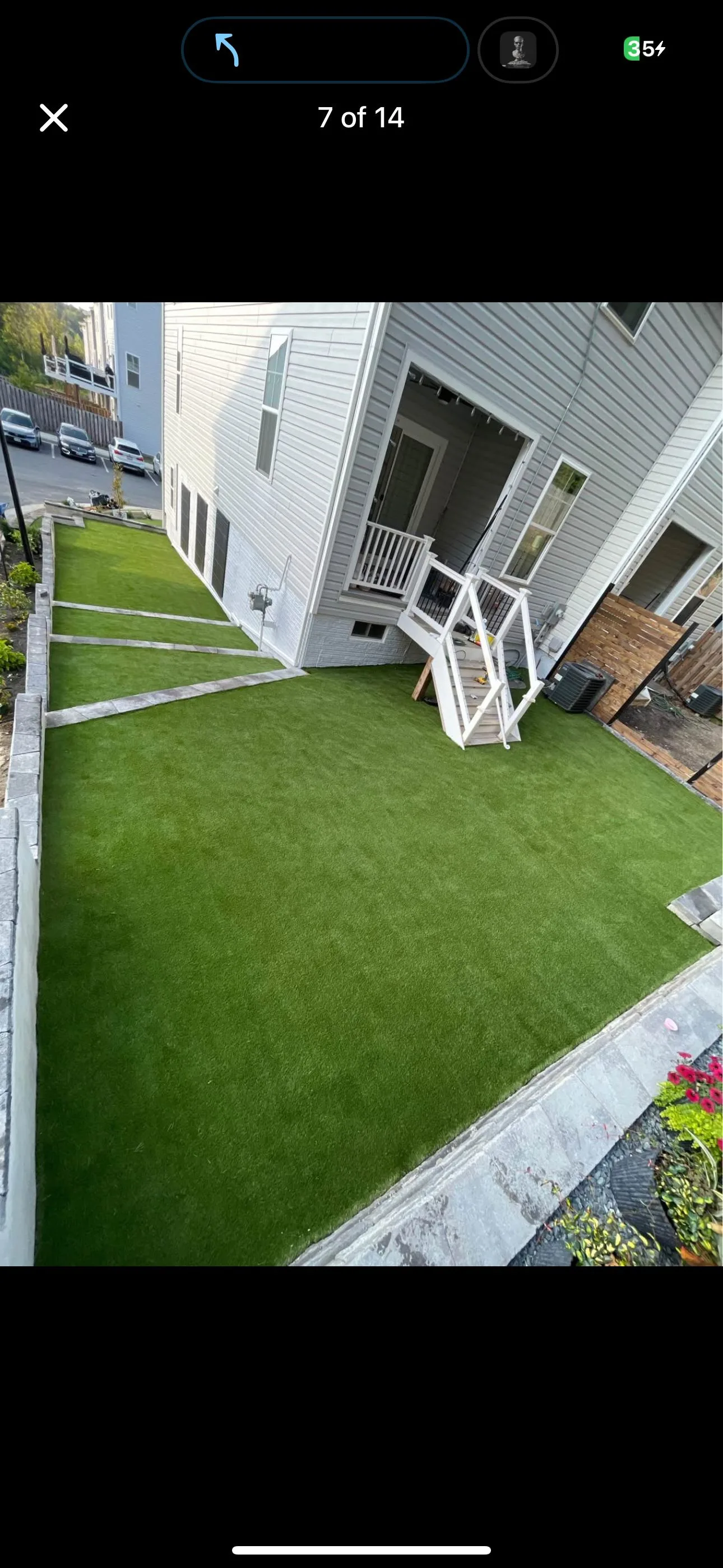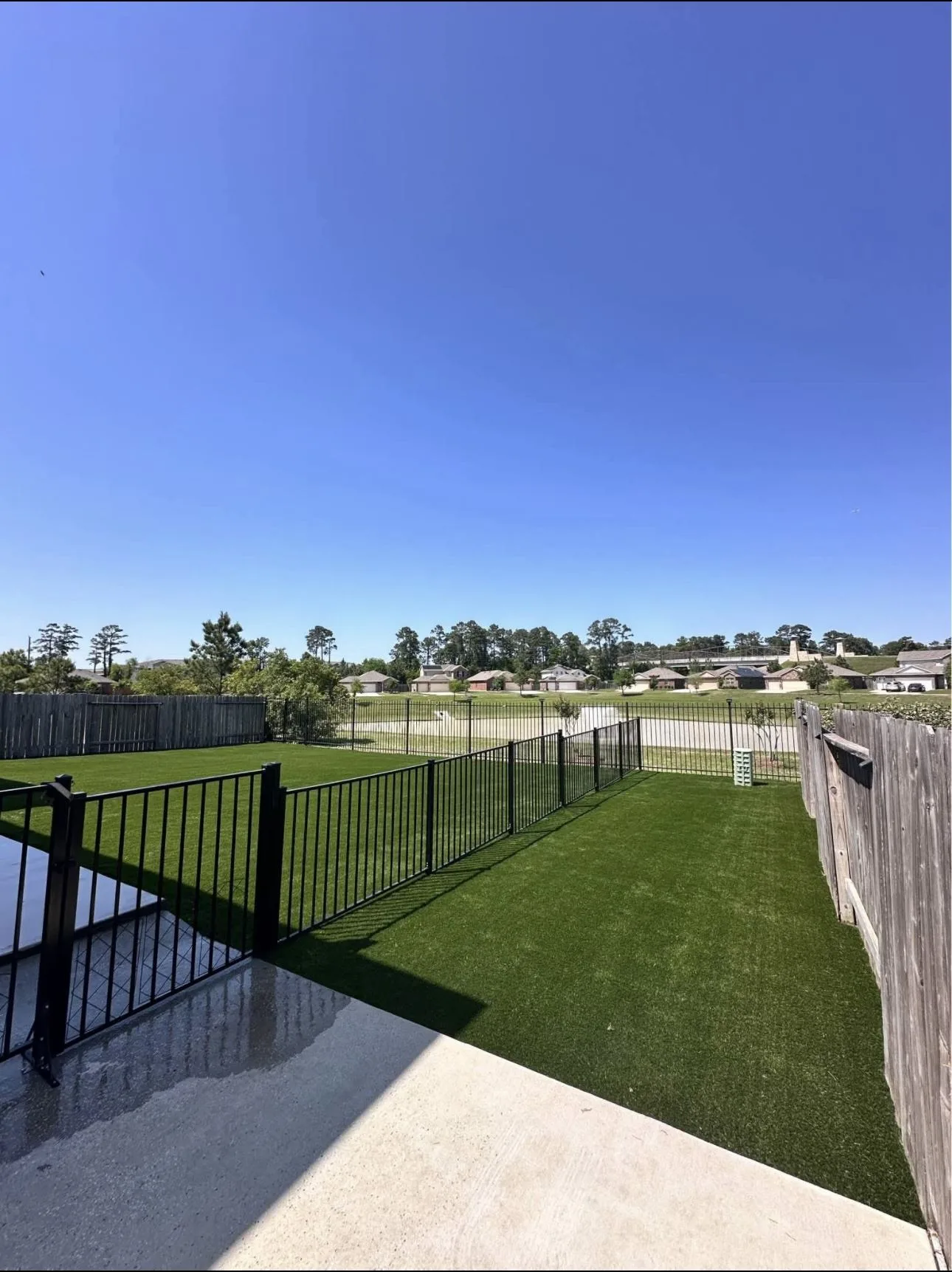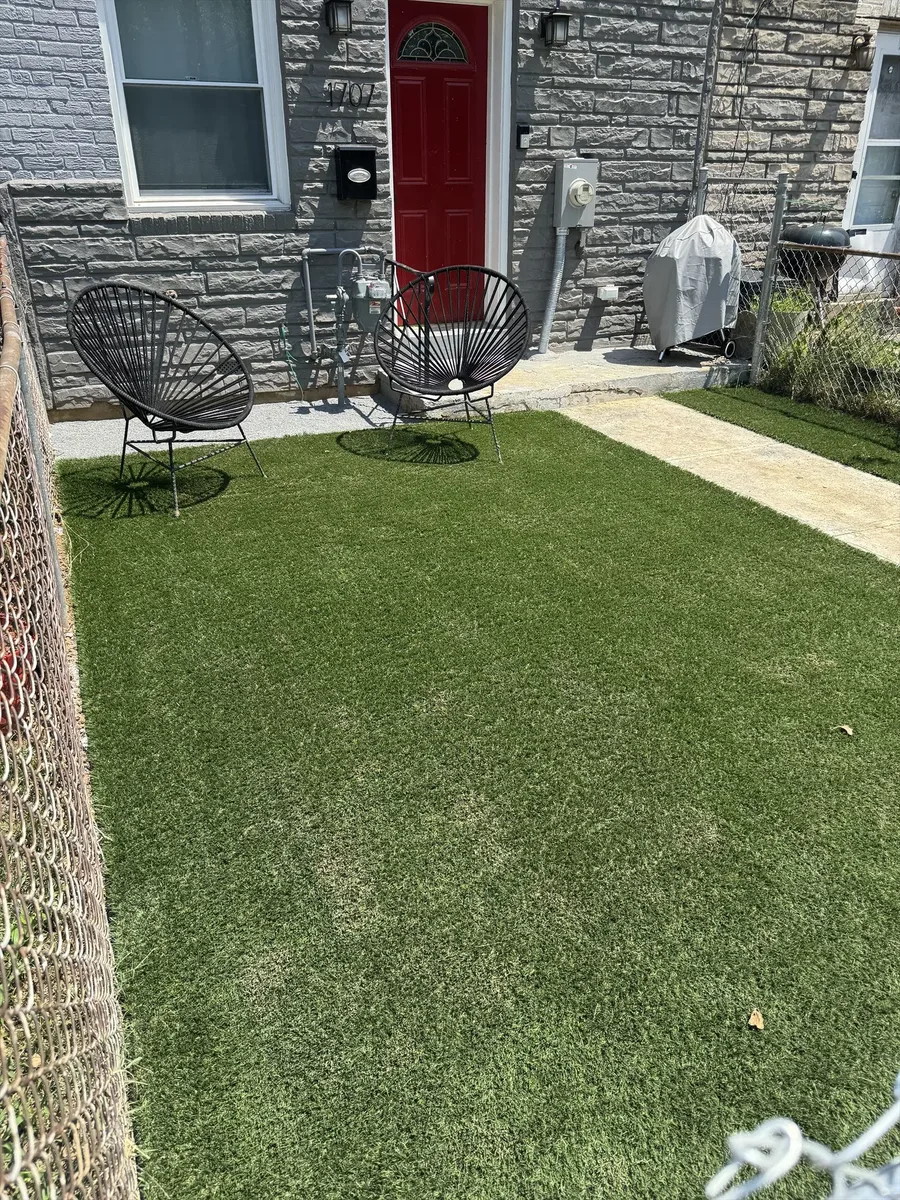
Actaeon installs artificial turf and synthetic grass systems for residential and commercial properties in Washington DC, Maryland, and Virginia — eliminating lawn maintenance while maintaining green, usable outdoor space.
A properly installed synthetic lawn lasts 15 to 20 years with no mowing, no irrigation, and no seasonal reseeding. The difference between a good installation and a poor one is what's underneath — base preparation is everything.
How we install artificial turf
The base determines how the turf looks and performs. We don't unroll turf over existing grass. The installation sequence:
- Existing surface removal. Existing turf, topsoil, and organic material are excavated to the required depth — typically 3 to 4 inches. This creates the void for the aggregate base.
- Compacted aggregate base. Crushed stone or decomposed granite is installed and compacted in lifts. The base must be level, properly sloped for drainage, and firm enough to support foot traffic without settling.
- Weed barrier. Landscape fabric installed over the base to prevent weed breakthrough without impeding drainage.
- Turf installation. Synthetic turf rolled out, cut to fit, and secured with nails or staples along the perimeter and at seams. Seams are positioned to minimize visibility and reinforced with seam tape.
- Infill. Silica sand or crumb rubber infill brushed into the fibers to support upright blade position and add weight. The type and amount of infill varies by product and application.
Which applications artificial turf works best for
Artificial turf is not the right solution for every situation, but it's the right solution for specific ones:
- High-shade areas where natural grass won't establish regardless of how much you spend on seed and sod — under dense tree canopy, in narrow side yards, in areas with no direct sun.
- High-traffic zones — dog runs, play areas, heavily-used paths where natural turf would be worn bare within a season.
- Low-maintenance requirements — rental properties, second homes, commercial sites where ongoing lawn care isn't practical.
- Water restrictions — properties subject to HOA or municipal water restrictions during drought.