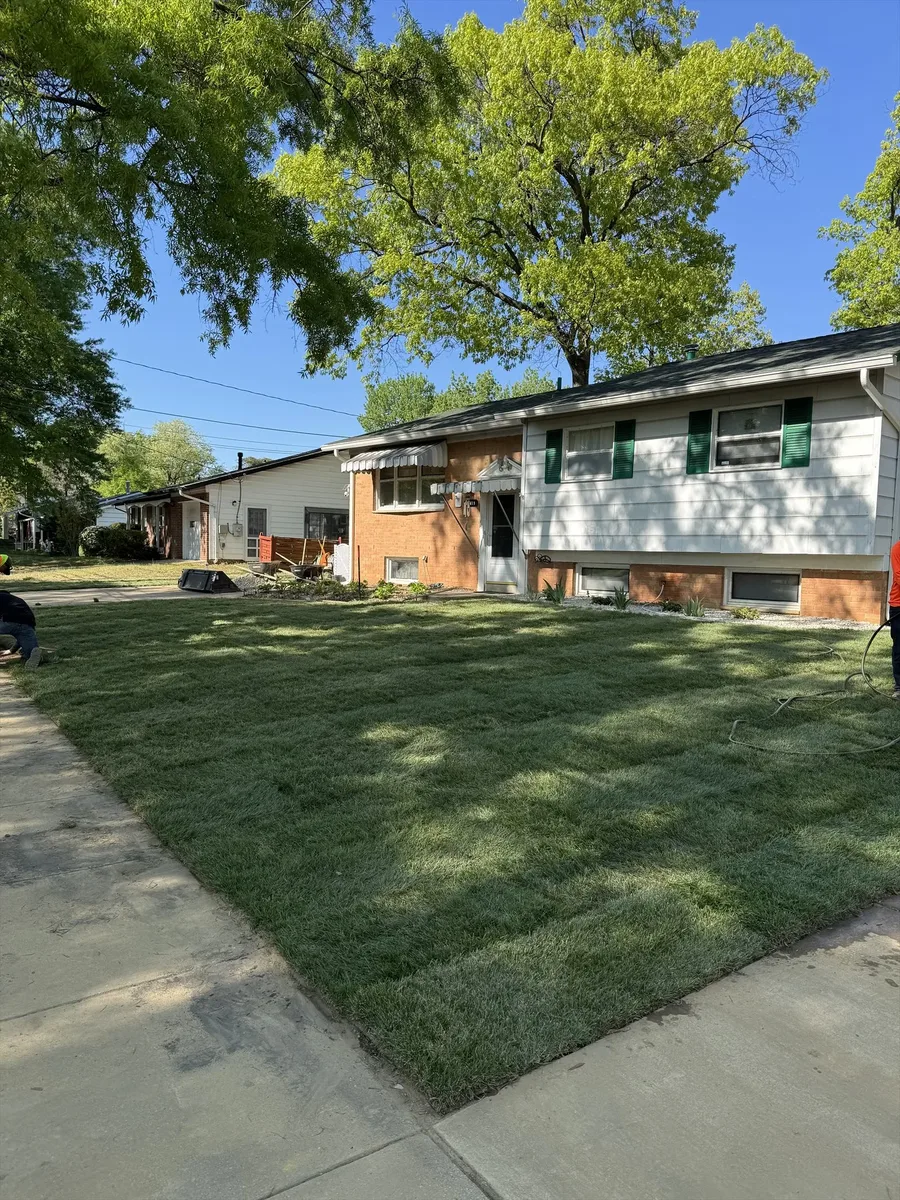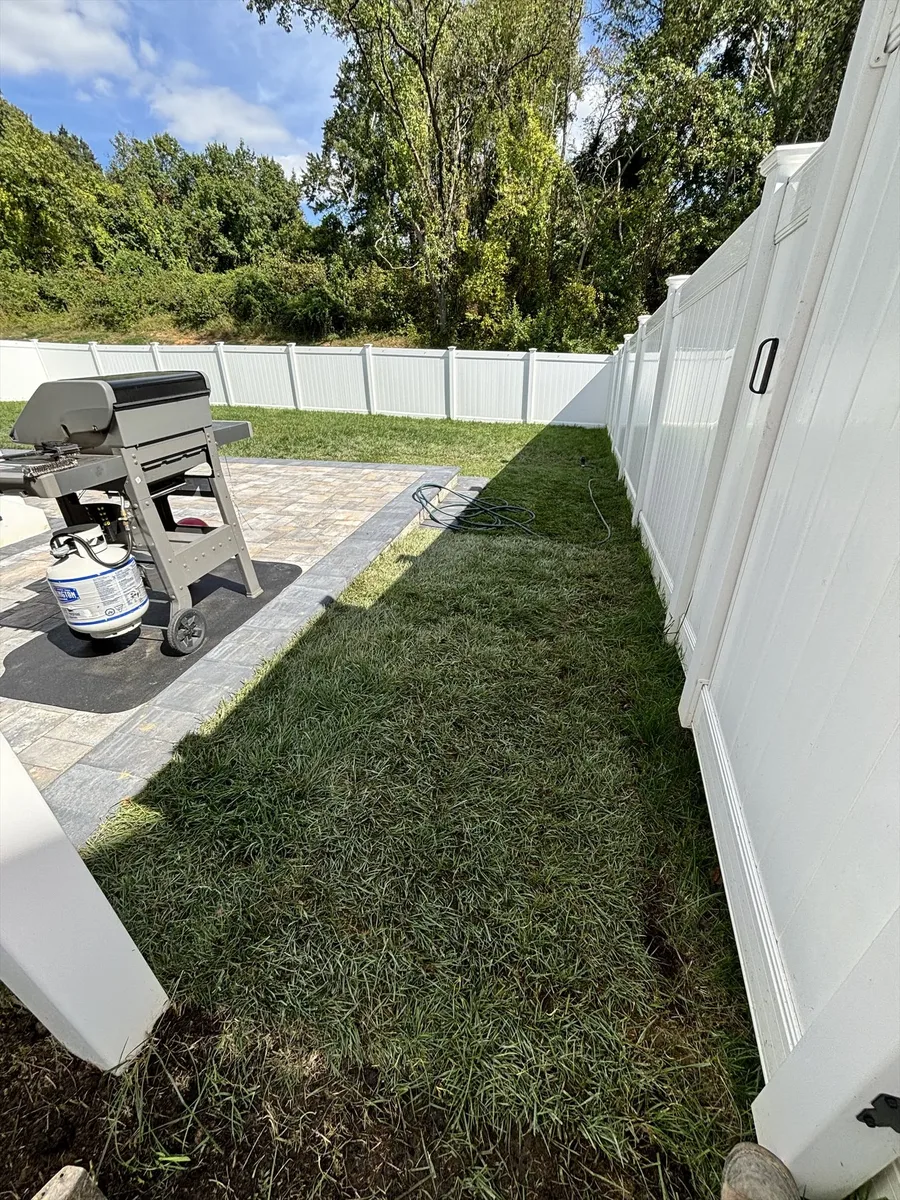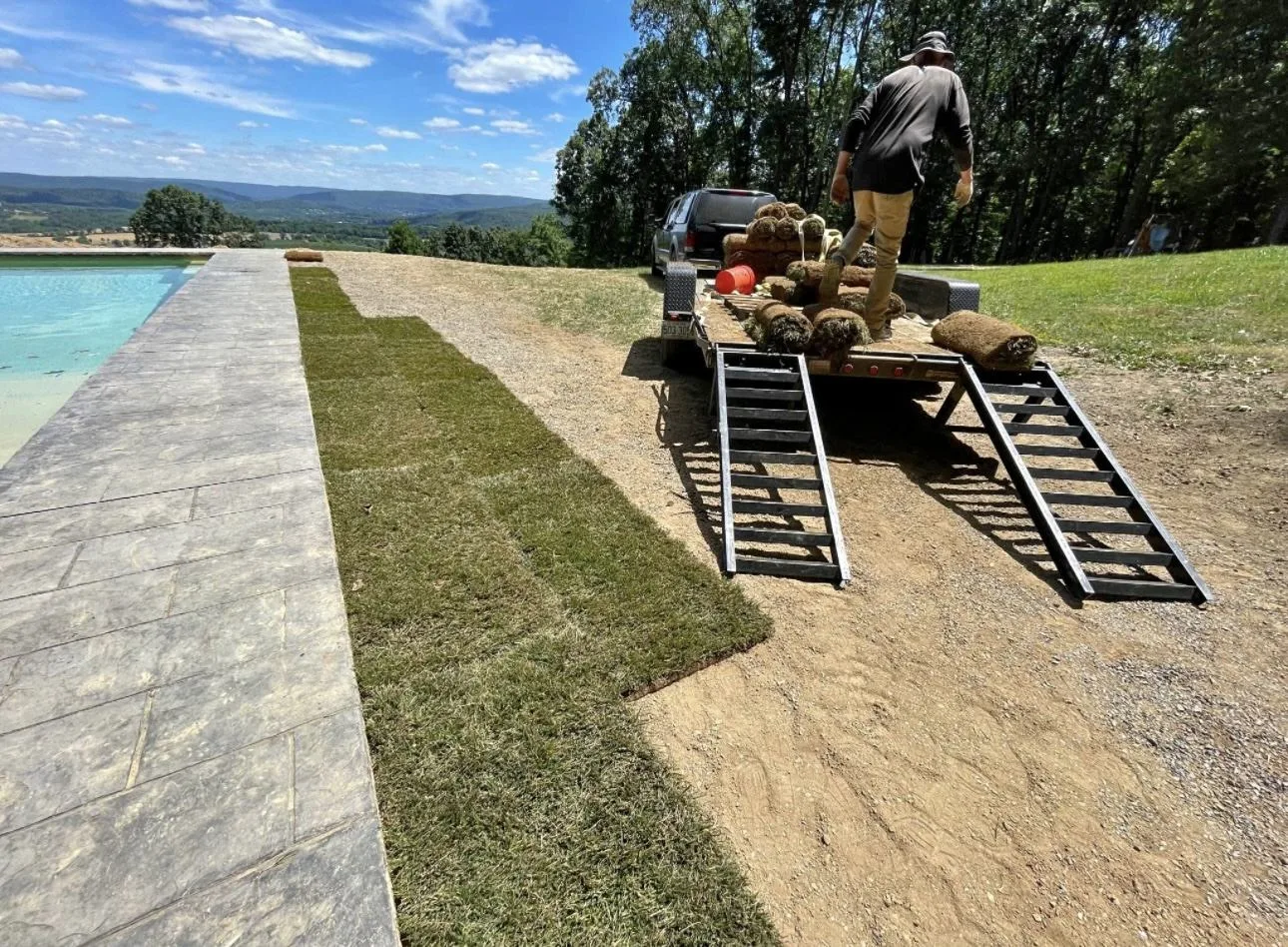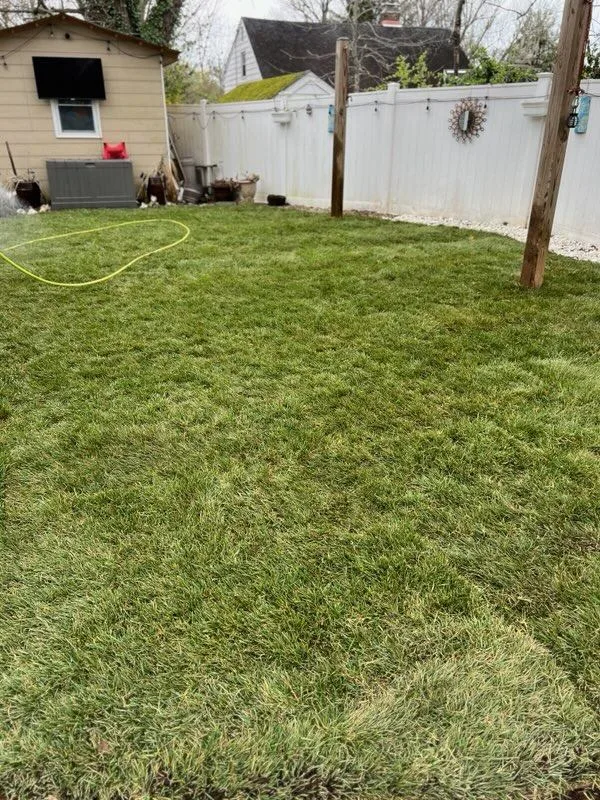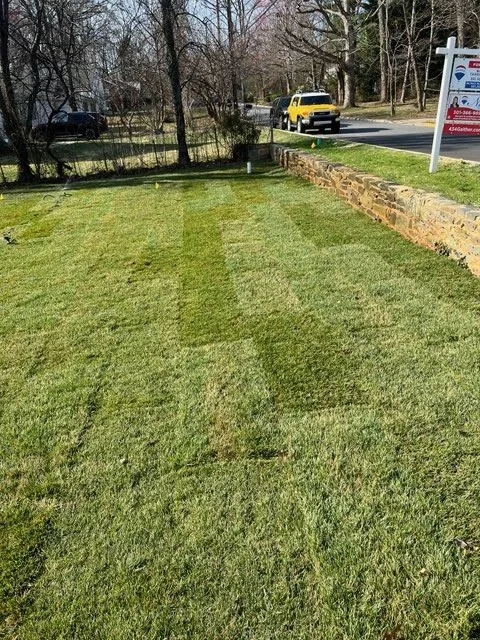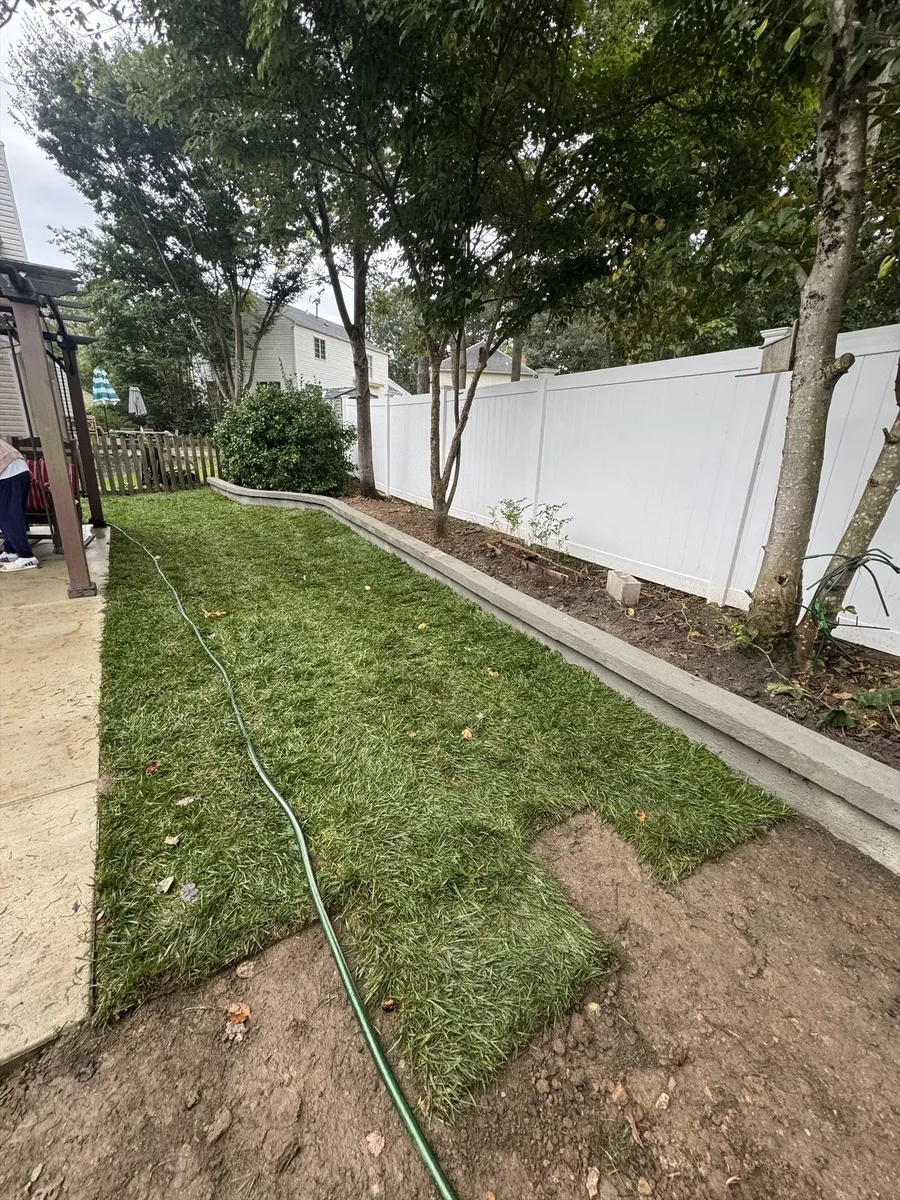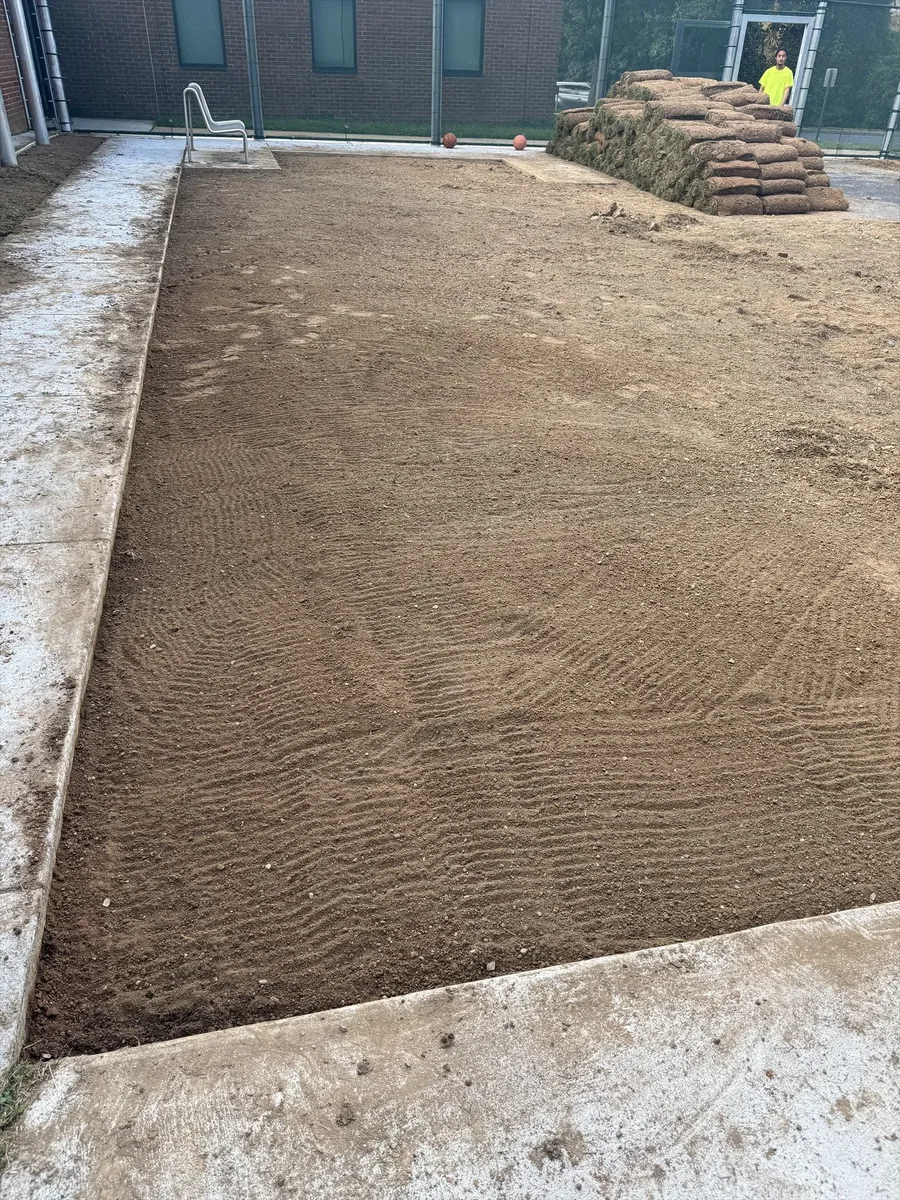
Sod installation gives you an established lawn immediately without waiting for seed to germinate; Actaeon prepares soil, lays sod, and ensures proper establishment for properties across Washington DC, Maryland, and Virginia.
Good sod installation is mostly about what happens before the sod arrives. By the time the pallets are on the truck, the outcome is already decided by the grading, the soil prep, and the drainage work done in the days prior. The sod itself is the last ten percent.
What proper sod installation requires
Skip the prep and the sod fails within a year. It'll look beautiful on day three and terrible by month eight when the roots haven't made it through the compacted subsoil, the grade still pools water, and the lawn struggles through its first summer.
Proper sod installation involves:
- Removal of existing turf. Old grass and thatch are stripped, not just mowed short. Laying new sod over old turf is the fastest way to kill both.
- Grade correction. Any low spots are filled, any high spots reduced, and the final grade pitches water away from the house and toward drainage features. Sod on a bad grade amplifies the drainage problem.
- Soil amendment. Maryland clay is not a good growing medium for turfgrass. Topsoil and compost are incorporated into the top 4 to 6 inches of the bed to give roots something to grow into.
- Tilling and fine grading. The prepared soil is tilled to break up compaction, then fine-graded with a rake or box blade to create a smooth bed with no footprints or debris.
- Starter fertilizer. Applied to the prepared bed immediately before the sod goes down.
- Sod laying with staggered joints. Rolls laid tight with joints staggered like brick courses. Edges trimmed clean. Rolled to eliminate air gaps between sod and soil.
- Initial watering. Thorough soaking within an hour of installation, then a watering schedule for the next two weeks.
The varieties we install
Turf-type tall fescue blends
The workhorse of Maryland lawns. Cool-season grass, durable, moderate shade tolerance, drought-resistant for a cool-season species. We use premium blends with multiple cultivars rather than single-variety sod — better disease resistance and more uniform appearance over time.
Kentucky bluegrass blends
Finer-textured, richer color, better self-repair through rhizomes. Requires more water and more sun than tall fescue. Better suited to full-sun lawns with irrigation.
Fescue-bluegrass mixes
The best of both — tall fescue for durability, bluegrass for self-repair and color. Our default recommendation for most residential DMV lawns.
Zoysia (warm-season)
Less common in the DMV but possible. Warm-season grass that goes dormant (brown) in winter. Dense, tight-growing, low water. We install it when clients specifically request it but it's not our default recommendation for this climate.
When to sod vs. seed
Sod gives you an instant lawn. Seed costs a quarter as much but takes a full growing season to fill in and is vulnerable to weather during establishment. We recommend sod when the timing matters (before a sale, for an event, to stop erosion), when the slope is steep enough that seed would wash away, or when the client simply wants the instant result. We recommend seed when budget is the primary driver and the homeowner is willing to baby a new lawn for 3 to 6 months.