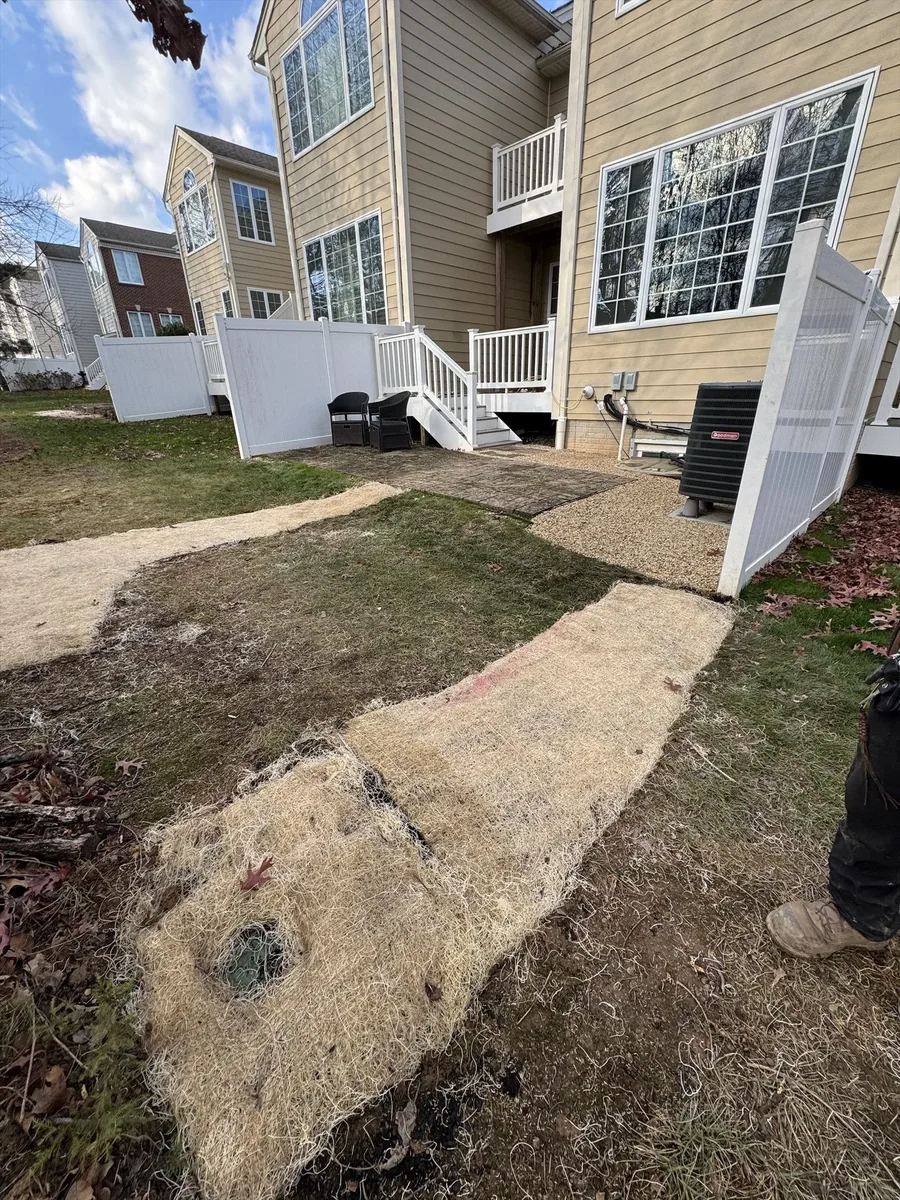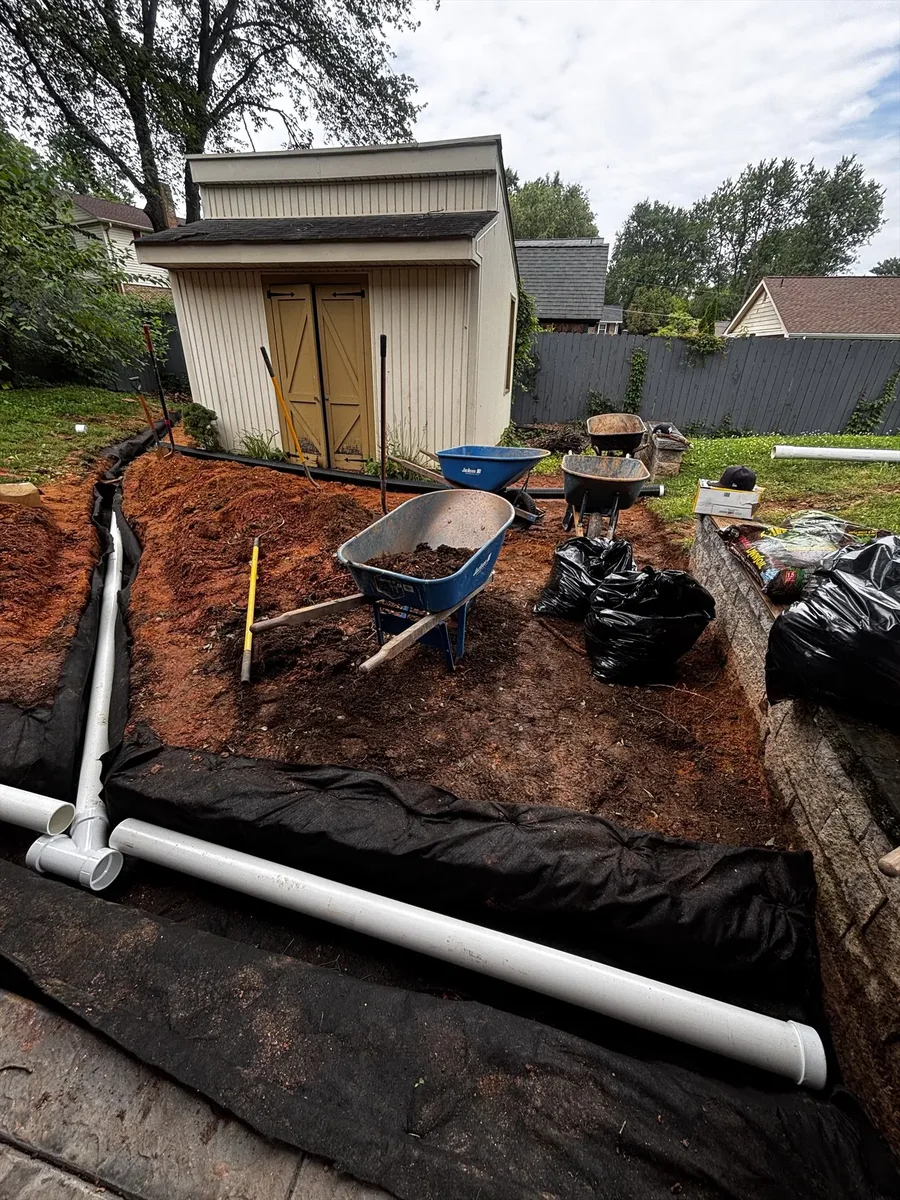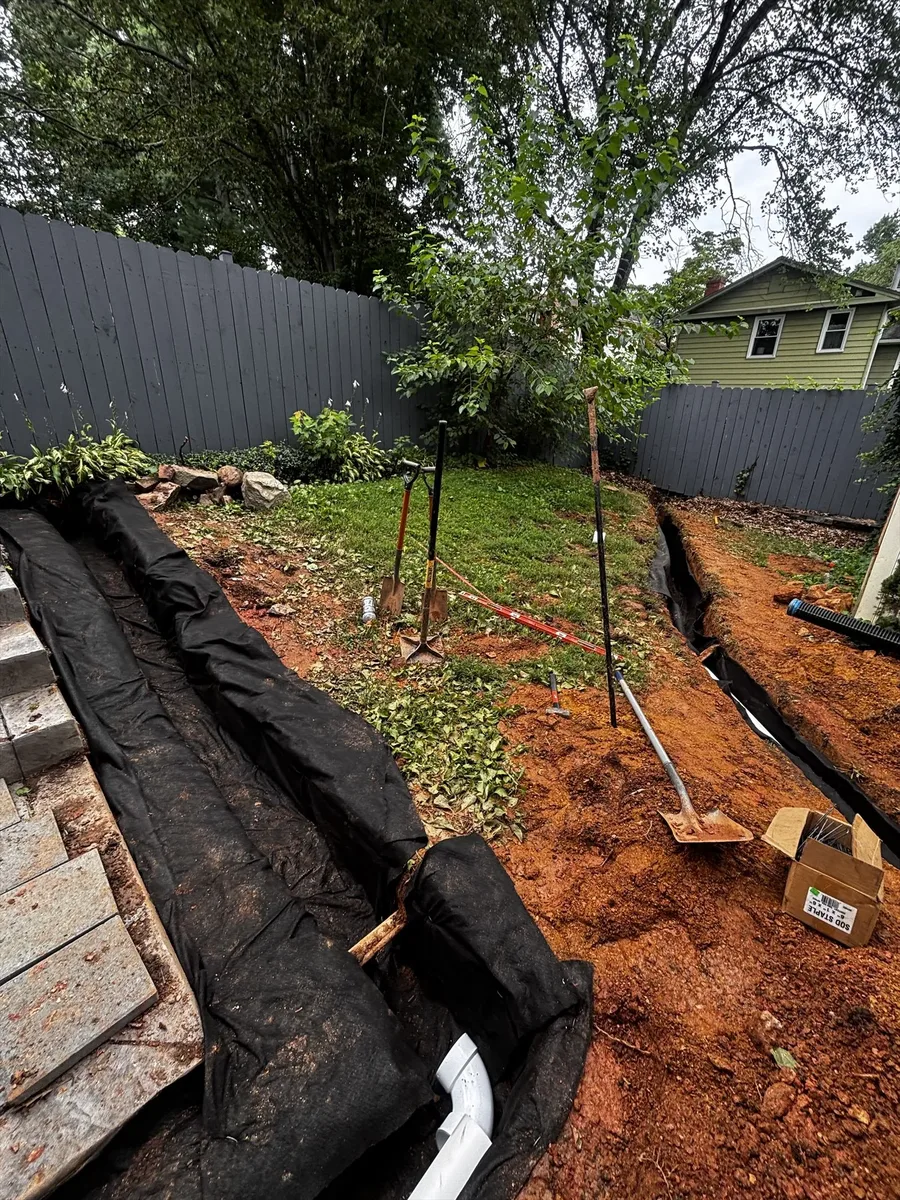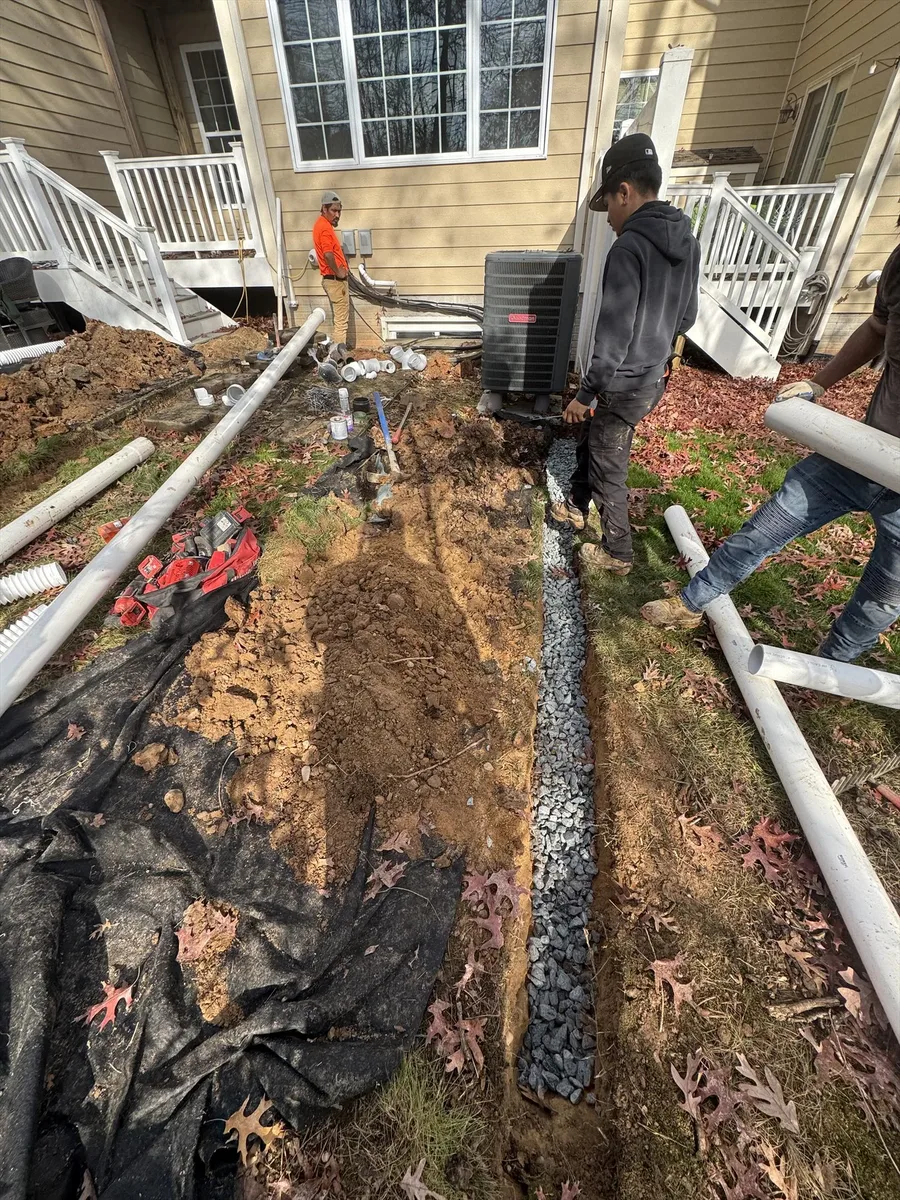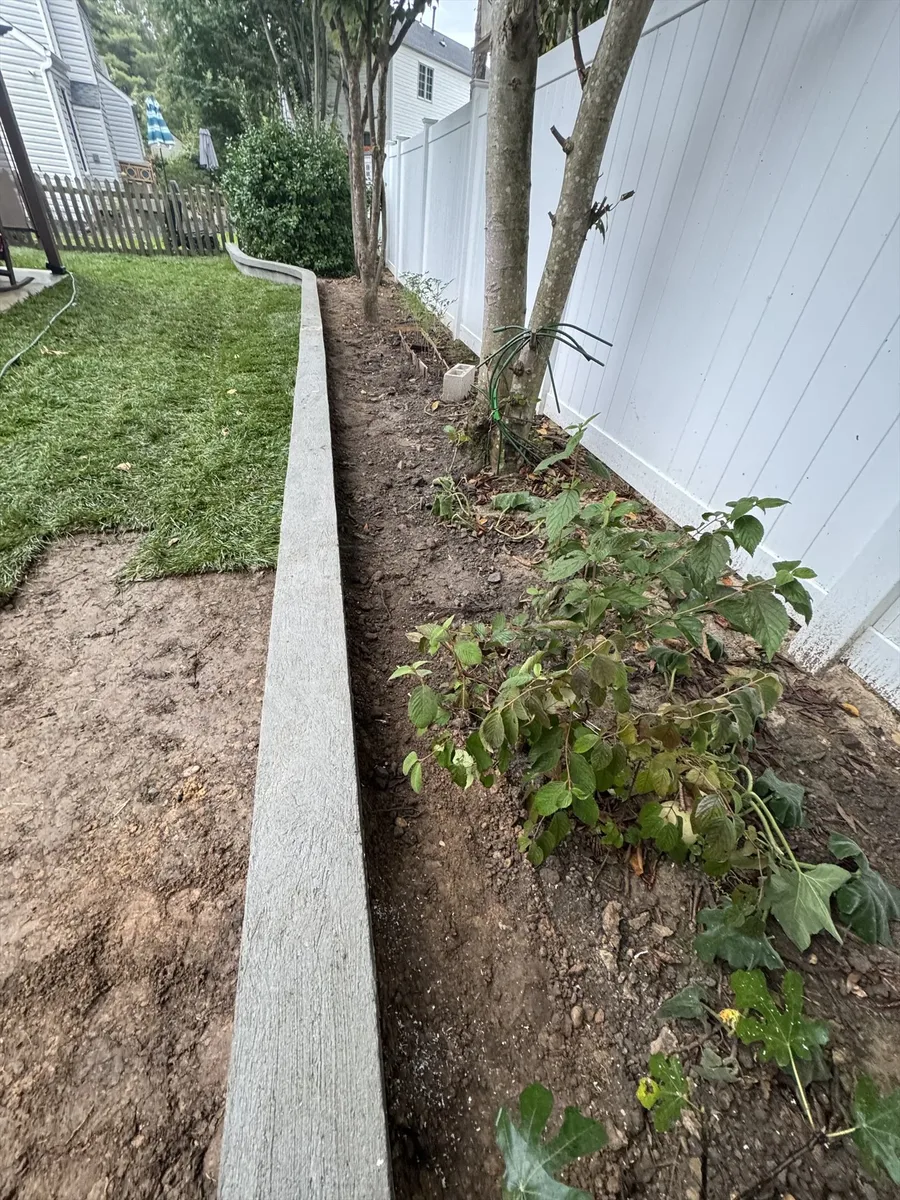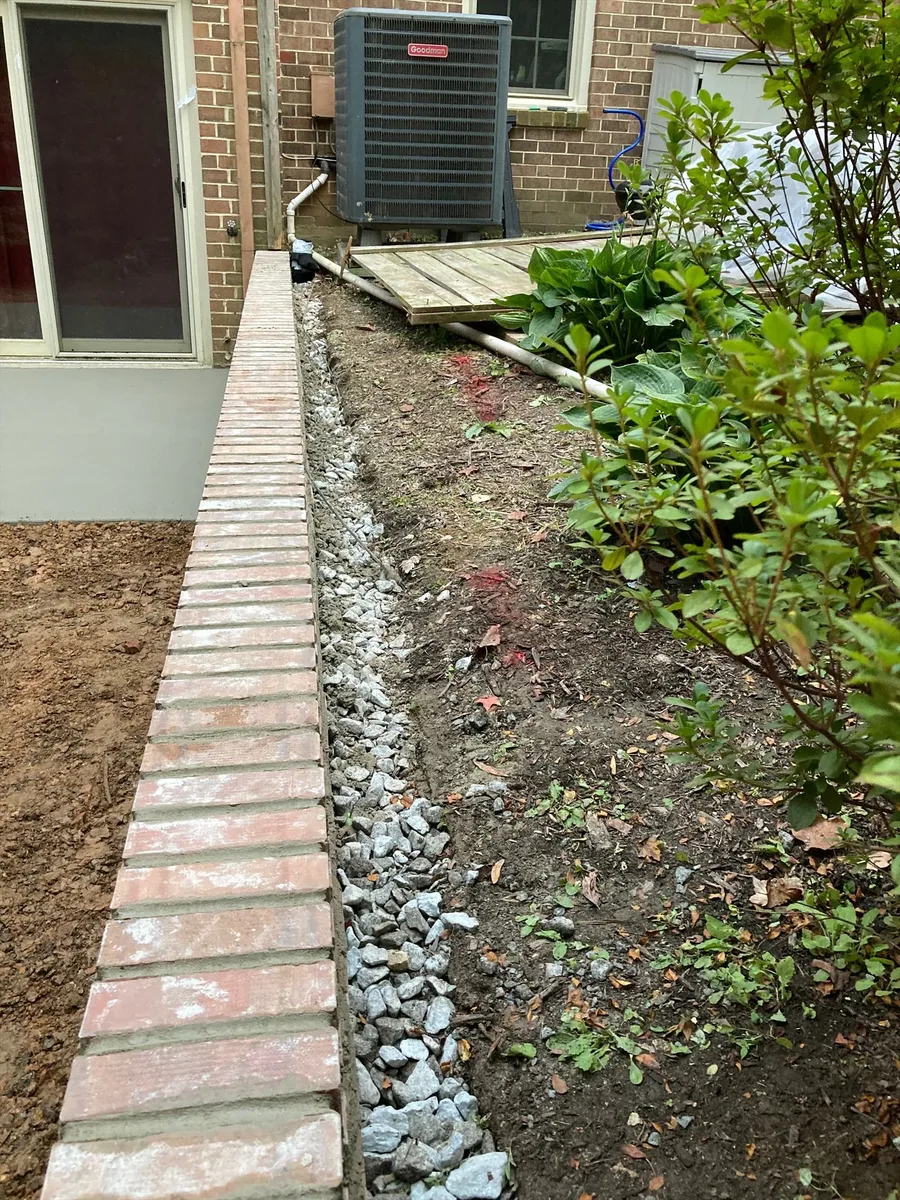
A French drain is a gravel-filled trench with a perforated pipe that collects and redirects groundwater away from foundations, yards, and structures; Actaeon installs French drains throughout Washington DC, Maryland, and Virginia.
A French drain is one of the simplest drainage tools in existence — perforated pipe in a gravel trench. It's also one of the most commonly installed wrong. The difference between a French drain that works for thirty years and one that fails in three is entirely in the details most contractors skip.
What makes a proper French drain
A French drain that works has seven elements, all executed correctly:
- Correct slope. A minimum of 1% fall from inlet to discharge, maintained consistently. Flat or reversed sections hold water and silt up over time.
- Adequate depth. Deep enough to intercept the water you're trying to move, usually 18 to 36 inches depending on the problem.
- Proper pipe sizing. 4-inch perforated pipe is the minimum for residential. Larger pipe for longer runs or higher flow rates.
- Clean washed gravel. #57 or similar — never pea gravel, never dirty stone. Clean stone lets water through; dirty stone clogs within a year.
- Filter fabric wrap. Non-woven geotextile around the gravel trench. Without it, fine soil migrates into the gravel and the drain stops working.
- Defined discharge. Daylight, a dry well, or a connected storm sewer. A French drain without a discharge point is just an underground pond.
- Accessible cleanouts. At intervals for future maintenance. Skipping cleanouts saves $100 on installation and costs $2,000 at the first clog.
When a French drain is the right tool
French drains solve specific problems: saturated lawns, soggy soil near foundations, subsurface water moving toward a basement, hillside seepage, high water tables intersecting with basement walls. They're not the right tool for surface water problems (where catch basins and surface grading are better) or for heavy concentrated flows (where solid pipe is better).
We often install French drains as part of a larger stormwater management system — combined with surface drainage, downspout work, and proper grading — rather than as a standalone solution.
Why cheap French drain installs fail
The failure modes are predictable. Skip the filter fabric: silt clogs the gravel in 12 to 24 months. Use pea gravel or dirty stone: same problem, faster. Run the drain flat because it's easier: water sits and the pipe silts up. Skip the cleanouts: no way to service it when it fails. Daylight the discharge into a neighbor's yard: legal problems and no fix.
A French drain installed correctly is quiet, invisible, and works for decades with minimal maintenance. A French drain installed to save time is a buried time bomb — usually discovered when the basement floods in the fifth year and the homeowner realizes the drain they paid for three years ago stopped working eighteen months in.