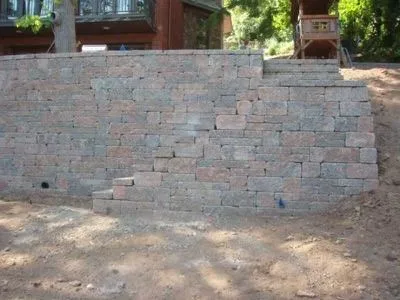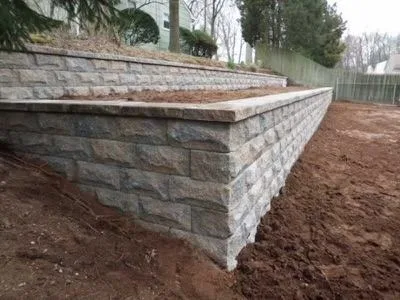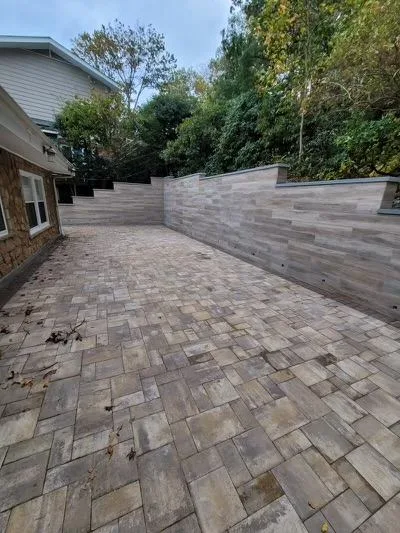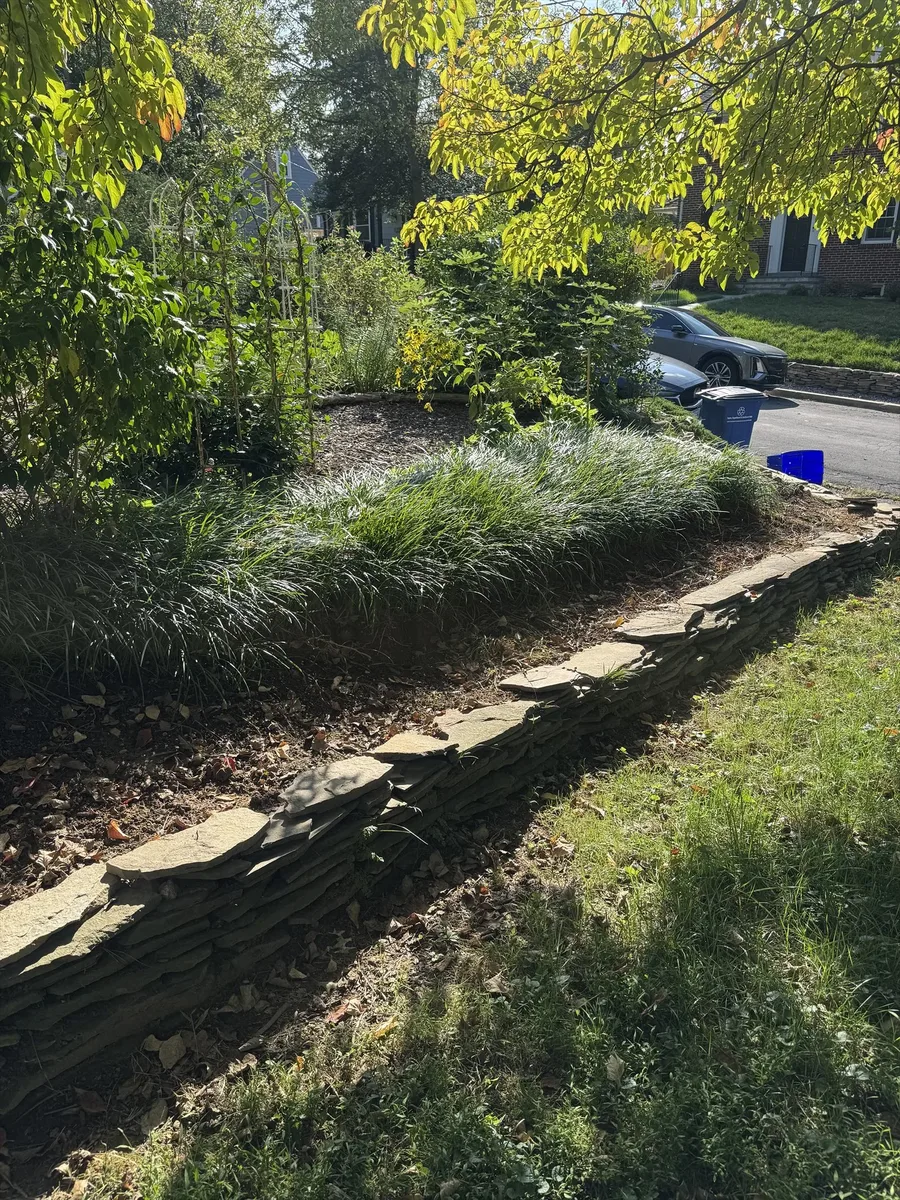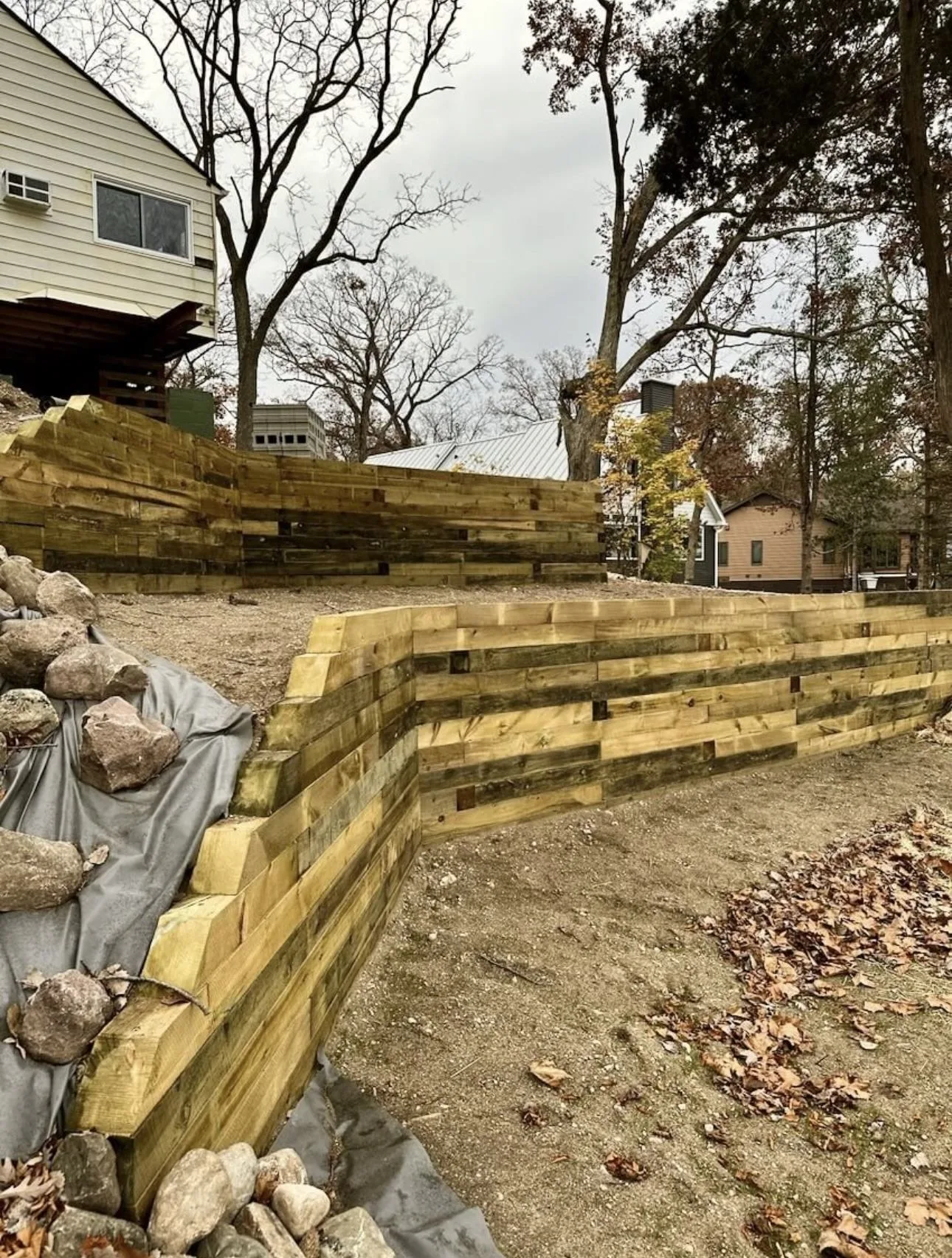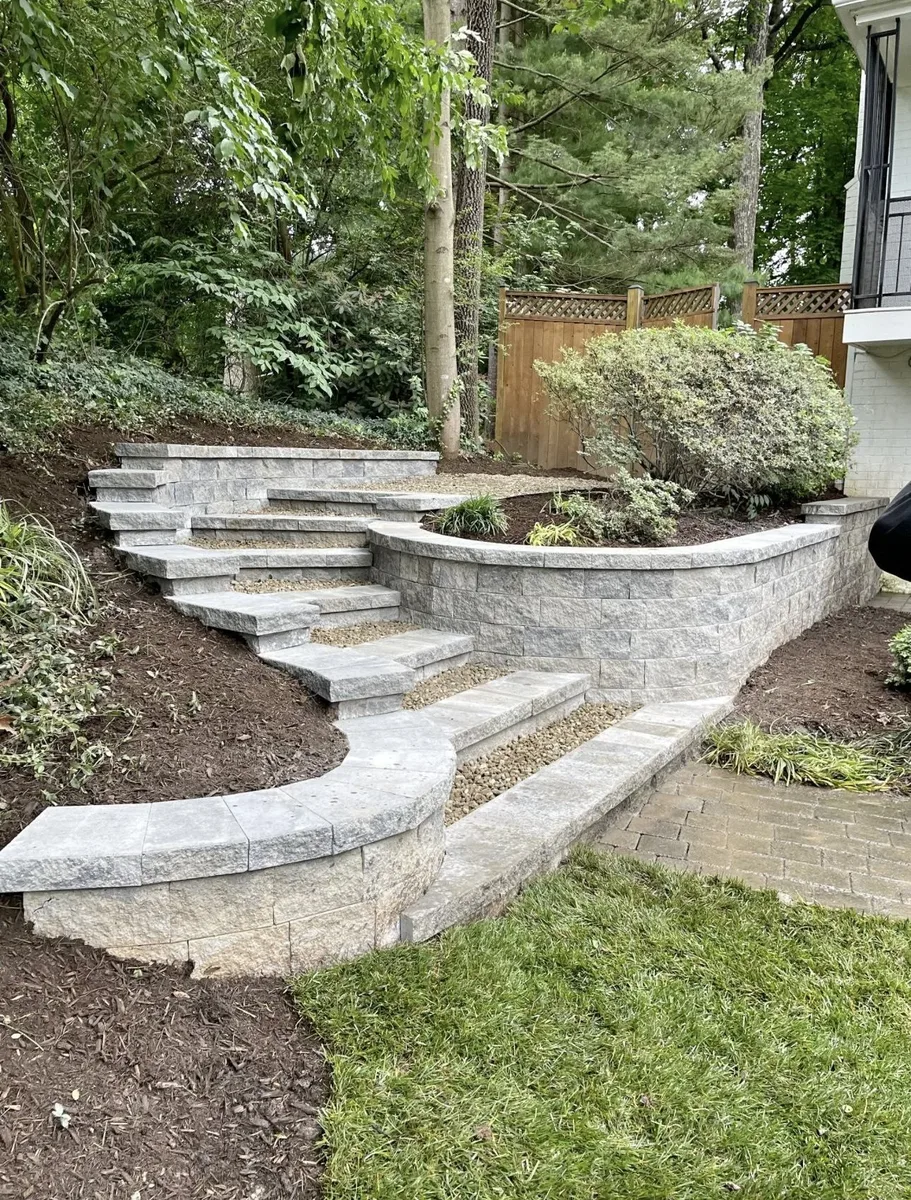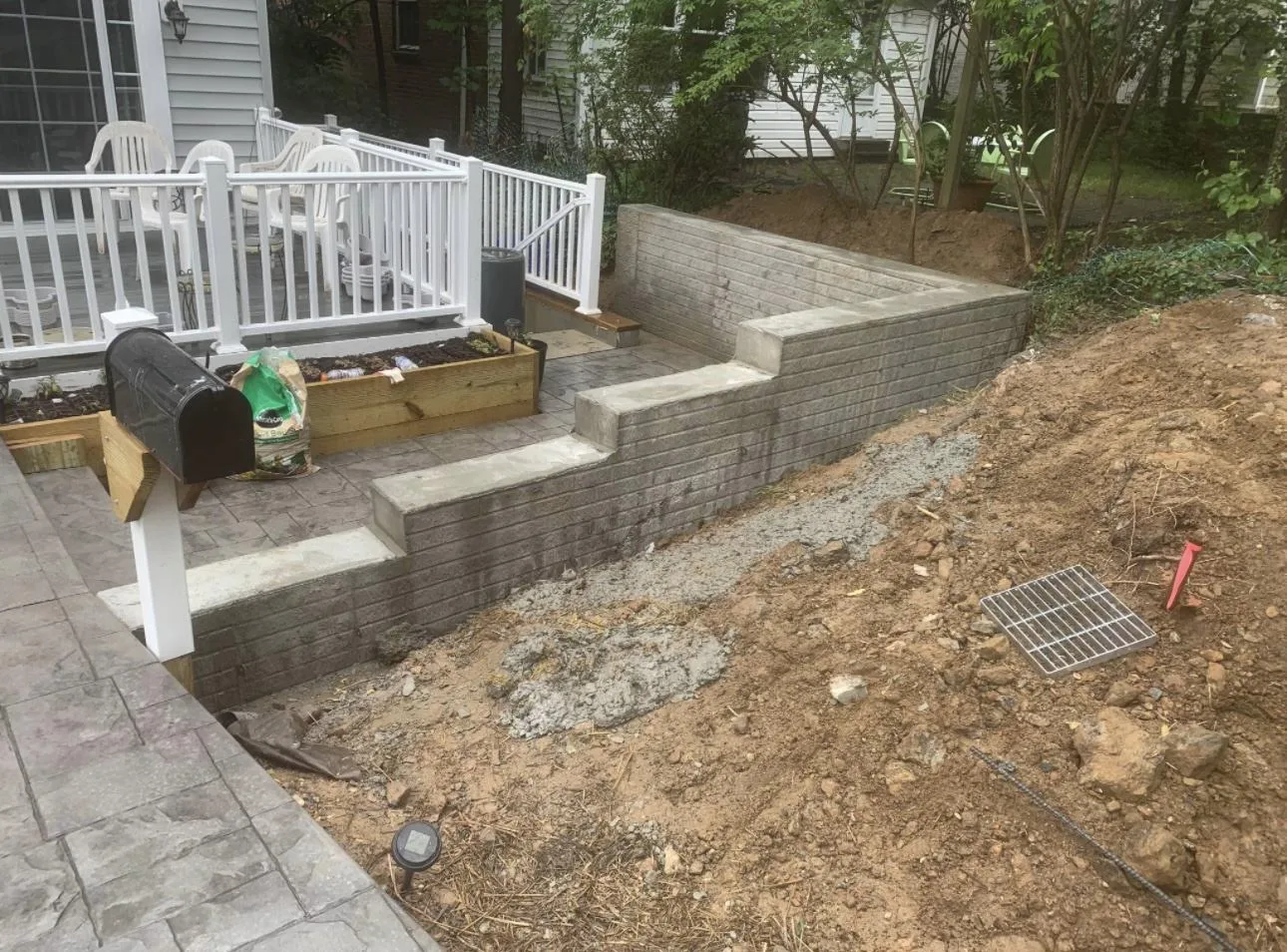
Retaining walls hold back soil on slopes and terraced grades to prevent erosion and create usable level areas; Actaeon builds retaining walls in concrete block, natural stone, and timber across Washington DC, Maryland, and Virginia.
A retaining wall is a structural element doing a specific job: holding soil against gravity, through wet seasons and dry, through freeze and thaw, for as long as the wall stands. Most retaining walls you see in suburban yards are failing in slow motion. The ones that last are built to a different standard — one that starts before the first block is laid.
Why most retaining walls fail
Retaining walls fail for predictable reasons, almost all of which are preventable. The most common failures we're called in to replace:
- No drainage behind the wall. Water builds up hydrostatic pressure against the back of the wall. In freeze-thaw climates like Maryland, that pressure cycles with temperature — pushing the wall forward a fraction of an inch every winter. Within a decade, the wall has visibly tilted.
- Inadequate footing. Walls over 3 feet need more than a leveled base. They need compacted gravel footings at proper depth below the frost line, or the whole wall heaves in winter.
- No geogrid reinforcement. For segmental block walls over about 4 feet, geogrid tied into the backfill provides lateral stability. Walls without it are leaning gravity walls — and gravity always wins eventually.
- Wrong block for the application. Not every decorative wall block is engineered for structural retention. Many aren't. Using the wrong product is a 5-year wall instead of a 50-year wall.
- Bad backfill. Backfilling with the excavated clay soil instead of proper drainage stone and compacting it in lifts. Clay holds water, exerts more pressure, and provides less support.
How we build walls that last
The formula isn't secret. It's just harder to do correctly than to do quickly.
- Engineering for walls over 4 feet. Required by most Maryland jurisdictions above 4 feet anyway. We use licensed structural engineers for any wall that needs one.
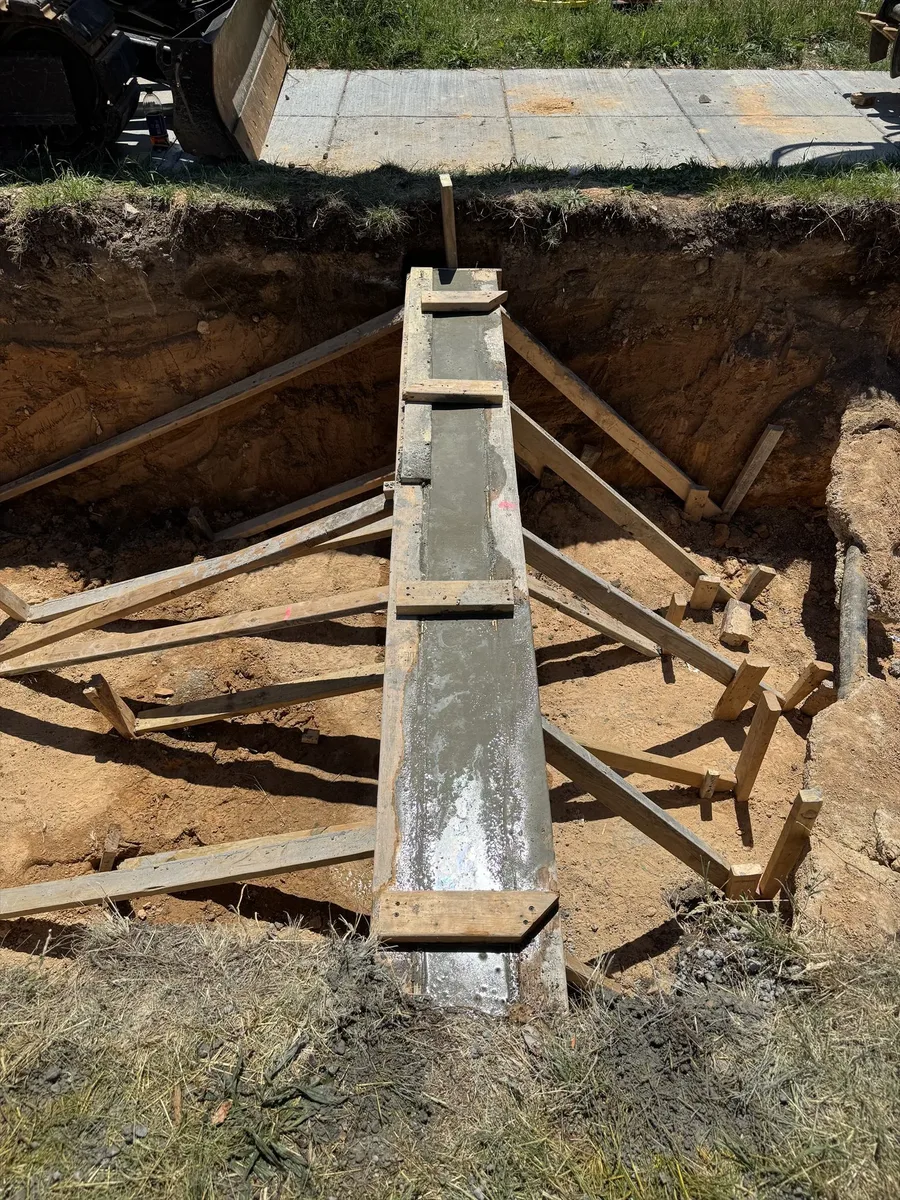
- Proper footing. Compacted gravel base at the correct depth, level in both directions, with drain stone below the wall in areas where groundwater is an issue.
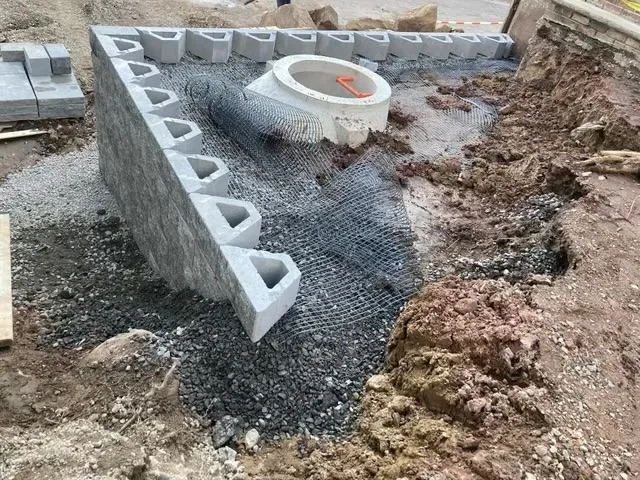
- Perforated drain pipe behind the wall. Daylighted or connected to a stormwater system. The drain collects water before it can build pressure against the wall.
- Geogrid reinforcement where required. Tied into compacted granular backfill in proper lifts.
- Appropriate block. We use wall systems engineered for retaining — Allan Block, Versa-Lok, Belgard Anchor, or equivalent. Not decorative garden block.
- Cap and finish work. Properly adhered caps, clean batter, and finish grade integration so the wall reads as part of the landscape, not as a construction project.
Walls and grading work together
Often the question isn't "how do I build a retaining wall" but "do I need a retaining wall at all." Some situations are better solved by regrading the slope, installing terraces at smaller heights, or combining walls with plantings. We'll tell you honestly which approach fits your site.
Because Actaeon also handles stormwater management and full landscape design, a retaining wall isn't an isolated project in our hands. It's coordinated with the drainage behind it and the planting in front of it.